The Boulder Series
2025 to date
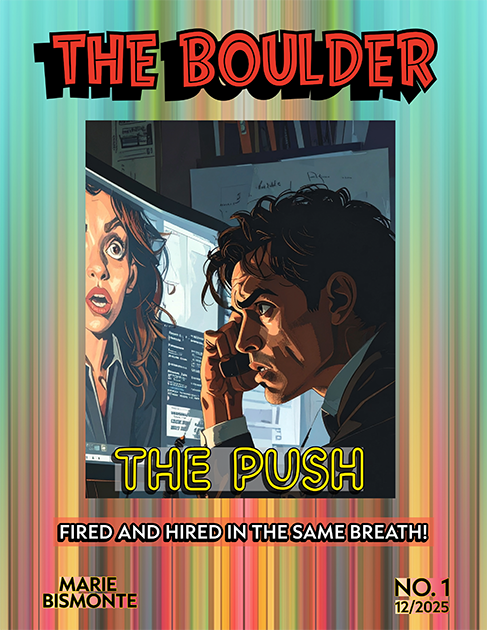
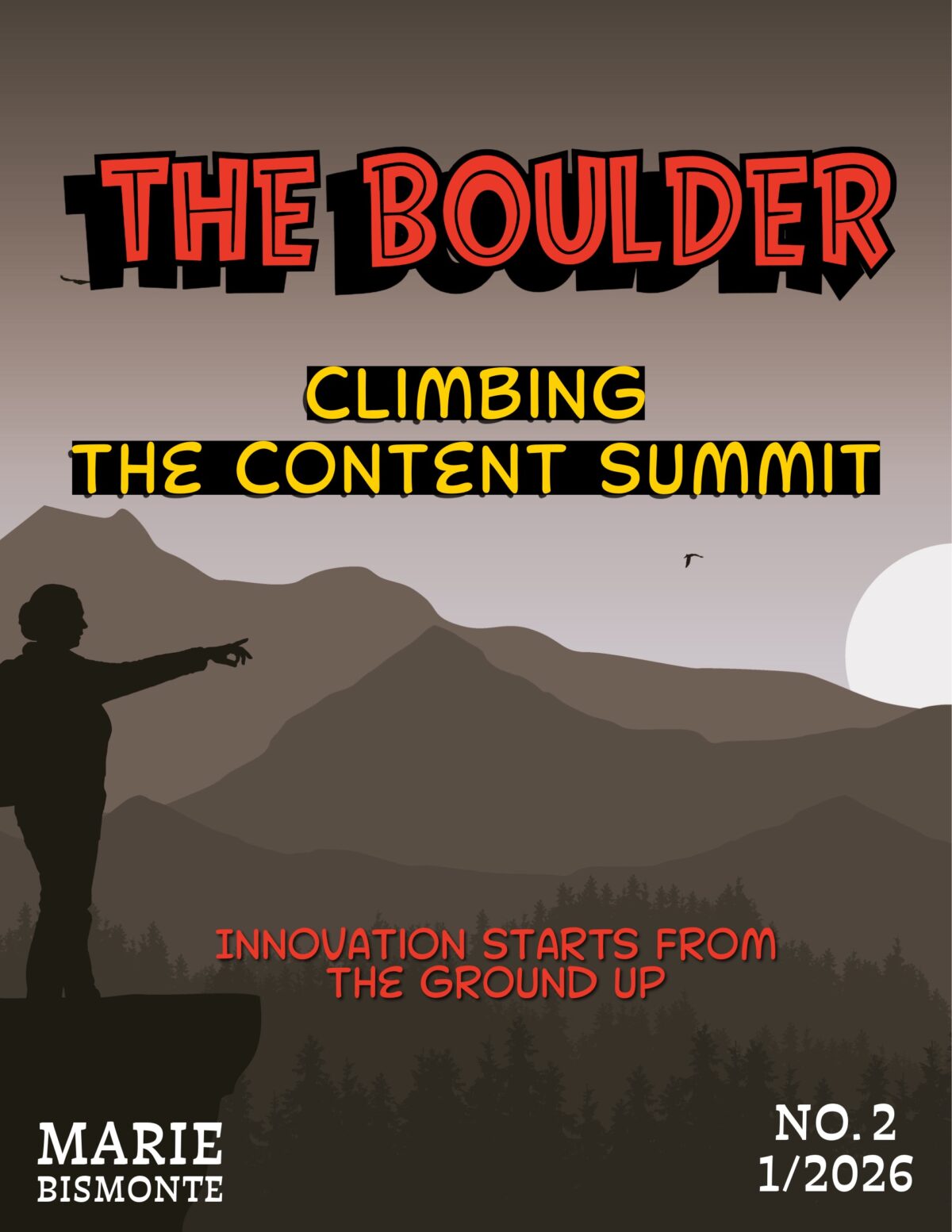
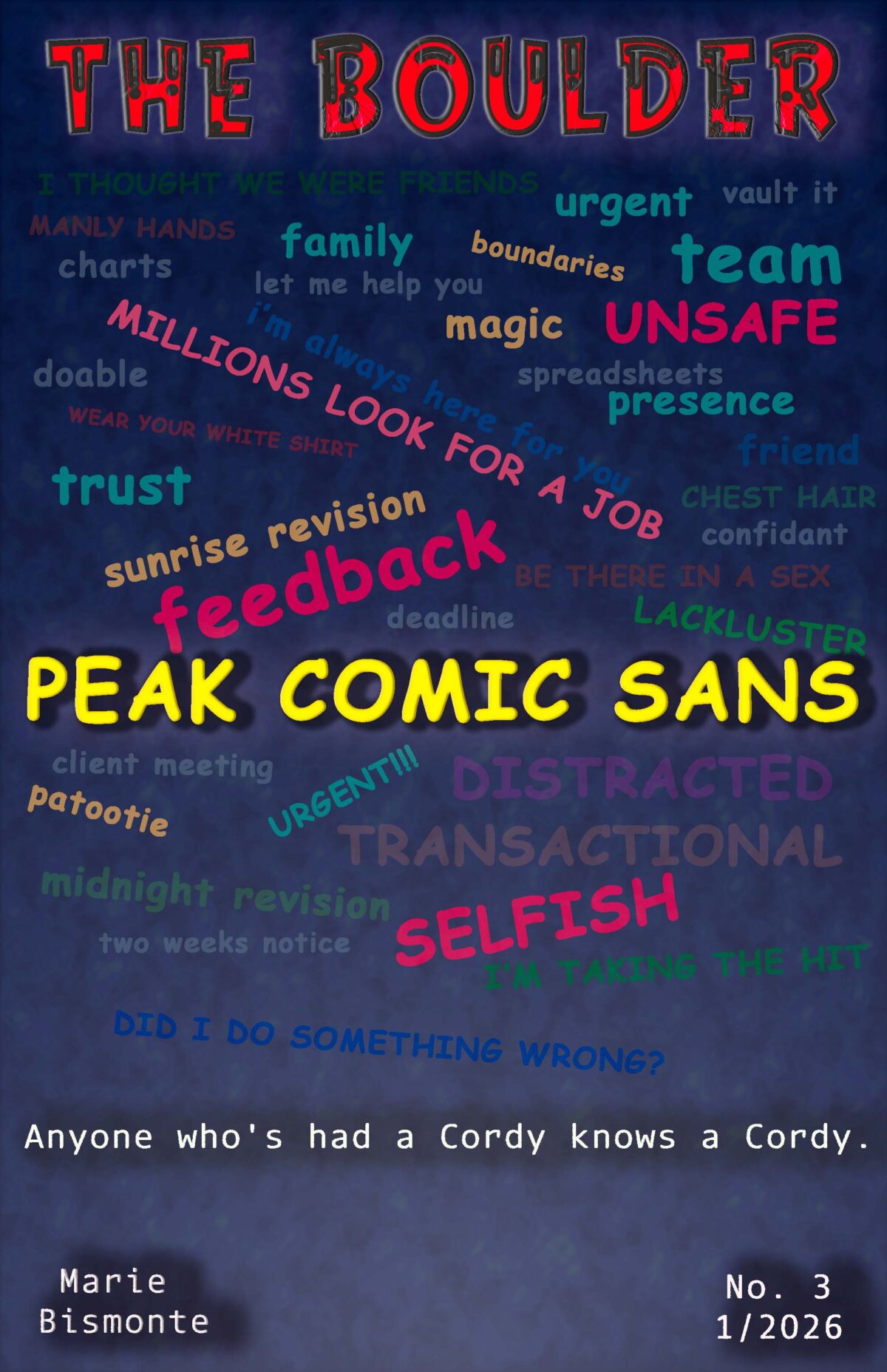
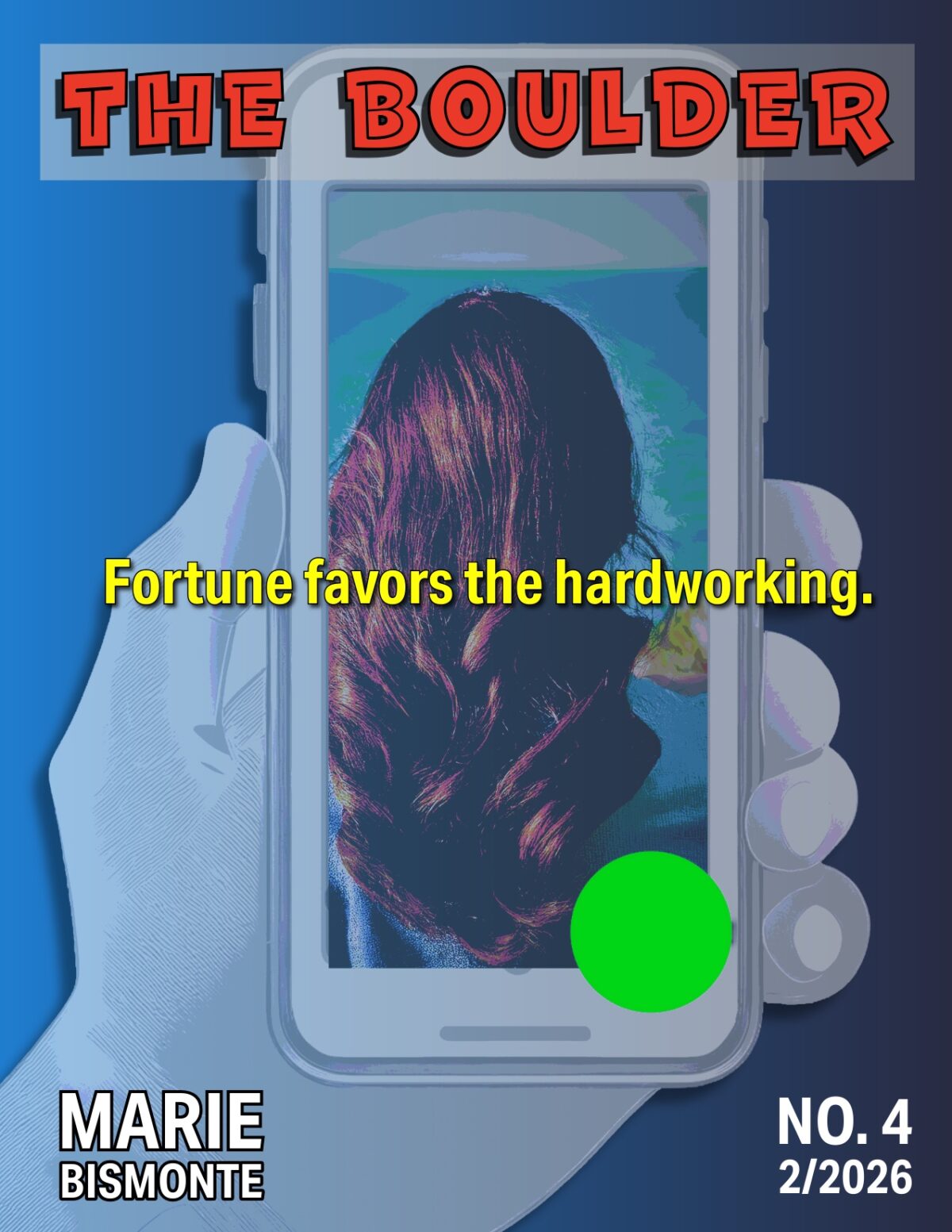
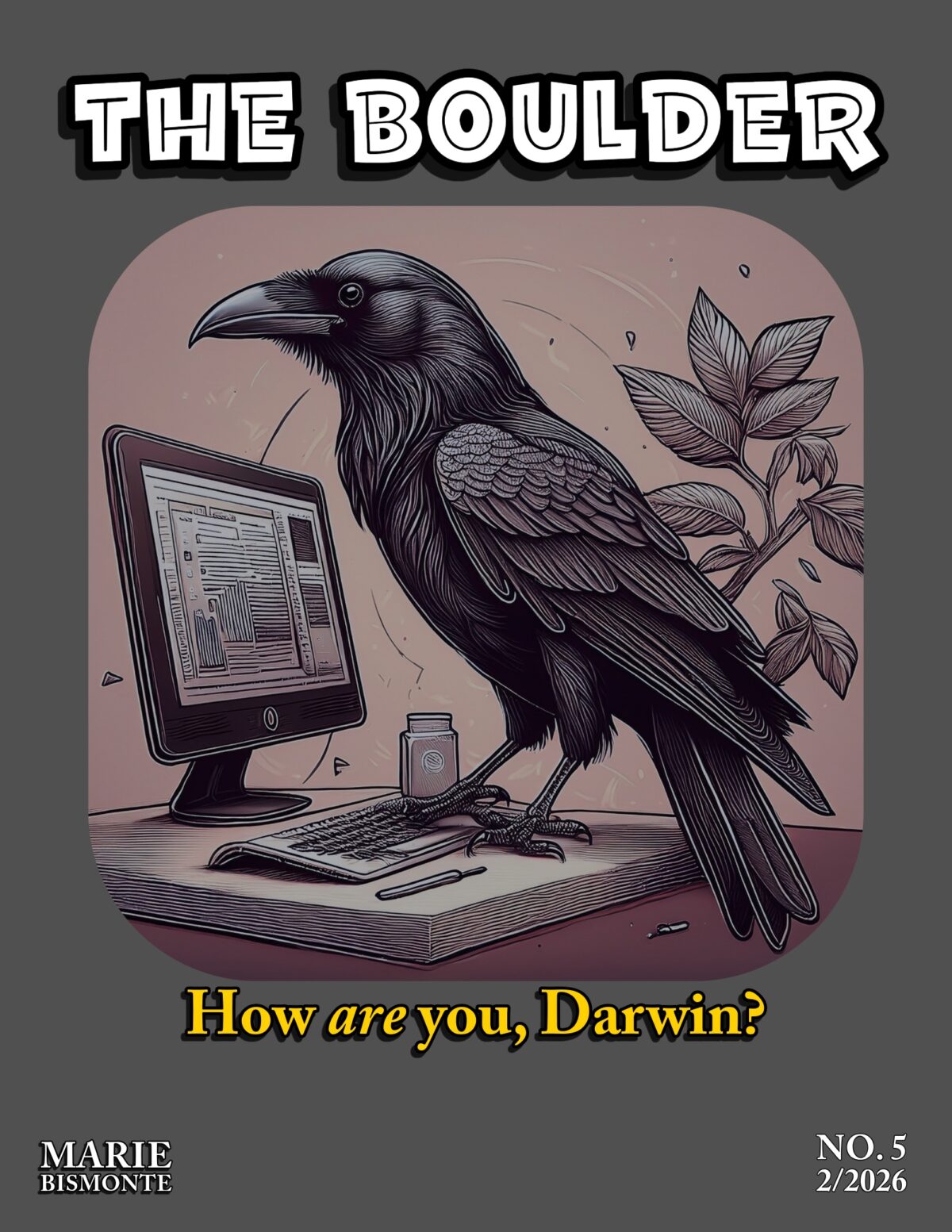
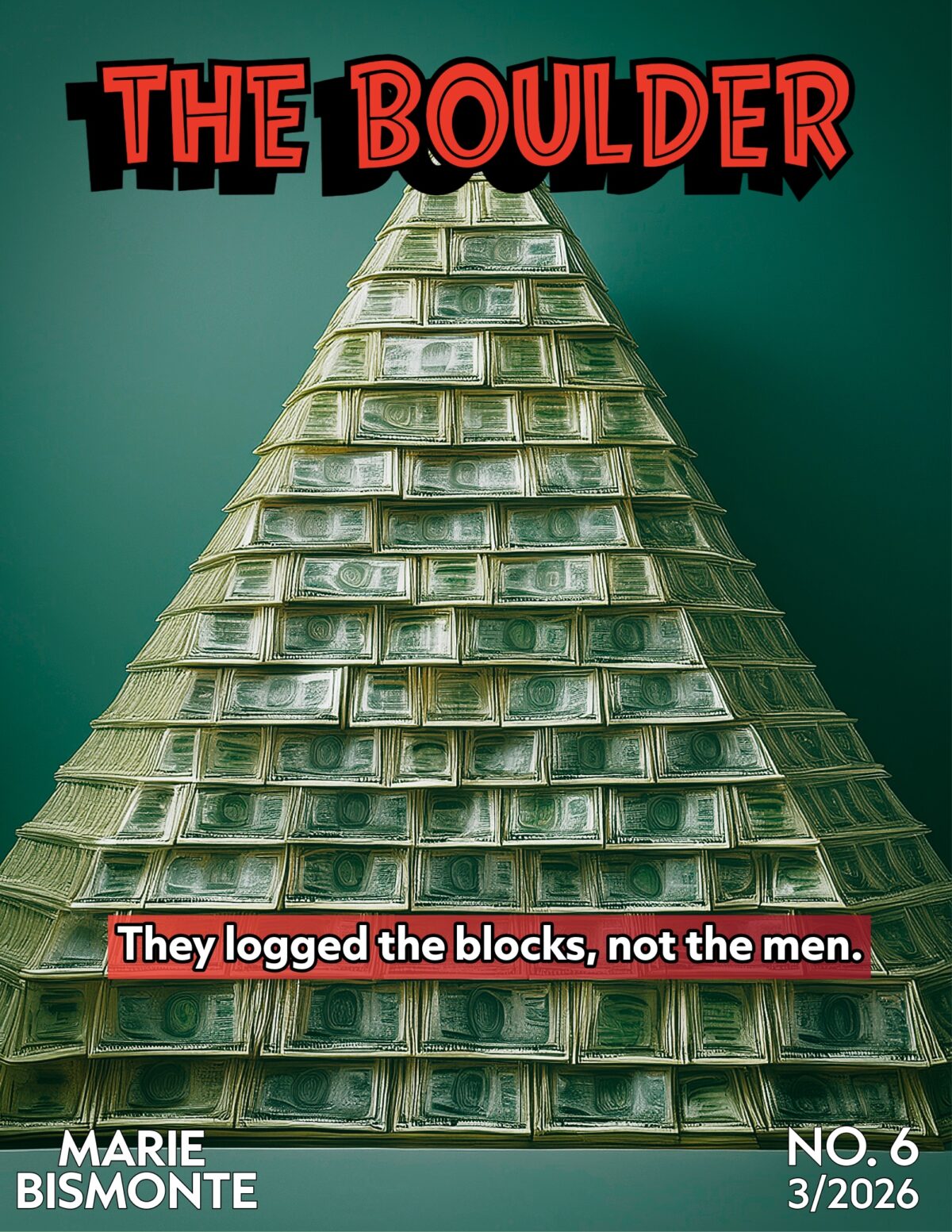
The Boulder Series is a 10-issue literary zine serializing the story of Darwin, a remote contractor trapped in cycles of being simultaneously fired and rehired, and his roommate Jeff, an OnlyFans creator whose entire vocabulary has been colonized by platform logic. Written in 1,500-2,000 word installments with pulp aesthetics and satirical fake advertisements, the series examines platform capitalism not as distant economic critique but as intimate, daily violation.
The narrative arc follows Darwin’s Sisyphean journey—but with a crucial inversion. He begins as someone purely acted upon, pushed by forces he can’t control: unpaid invoices from his abusive client-employer Cordy, rent perpetually due, a charity check that bounces, relationships mediated entirely through Betty. By the tenth issue, Darwin will have found something that can’t be monetized, can’t feed any algorithm, exists outside of extraction while locating small, real victories that don’t solve systemic problems. It ends where Camus’s essay does: “One must imagine Darwin happy now.”
Read all issues on itch.io →
A Study in Cartography: Fragments and Patterns
2025 to date
Completed / Ongoing Reader Engagement
Project Statement
A Study in Cartography explores whether cognitive architecture can be transmitted through narrative structure. The work investigates a specific question: can a reader connect with fragmented, recursive storytelling not because they fully understand the content, but because they recognize the pattern of thinking that created it?
This project grew from my experience at the 2022 Whitney Biennial, encountering Theresa Hak Kyung Cha’s videos and works in a dedicated space. I felt an immediate connection to her work without knowing who she was or anything about her context. I bought Dictée afterward, found it nearly impossible to understand, but felt compelled to surrender to its difficulty. Something spoke to me beyond language or cultural reference—a recognition of something familiar in how the work was structured.
The zine follows Mateo, a refugee child navigating displacement, trauma, and language acquisition through a fragmented consciousness that processes experience like a video game. Memory fragments, sensory overload, and survival mechanisms create a recursive narrative structure that mirrors how the mind actually adapts under pressure. The story maps Mateo’s consciousness through his journey of integration and self-discovery.
I want to test whether pattern recognition can create connection across the gaps between strangers’ experiences. Not understanding the story, but understanding the mind that made it.
The work functions as both artwork and experiment: documenting whether pattern recognition can create connection across the gaps between strangers, languages, experiences; whether the way we think can be a form of communication itself.
The investigation: Can an art object designed from specific cognitive architecture locate readers who share that architecture? The project tracks circulation through zine fairs, bookstores, and social media exchanges, documenting which readers engage deeply enough to contact the artist post-reading.
Methodology: Hand-production of 25 copies using kettle stitching that resembles neural pathways, distributed through targeted venues, with systematic documentation of reader responses and contact patterns.
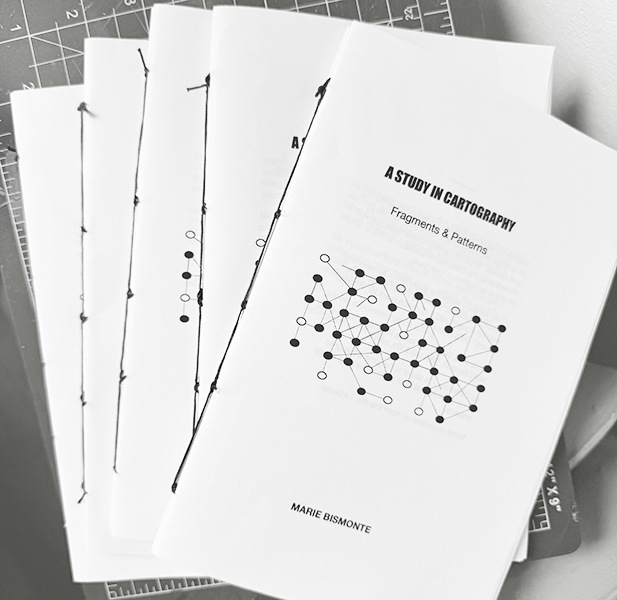
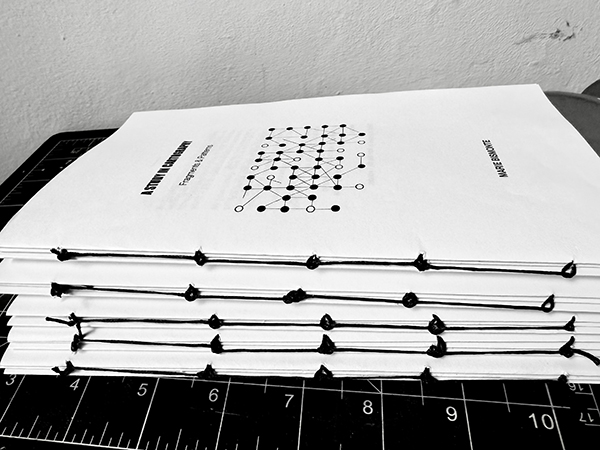
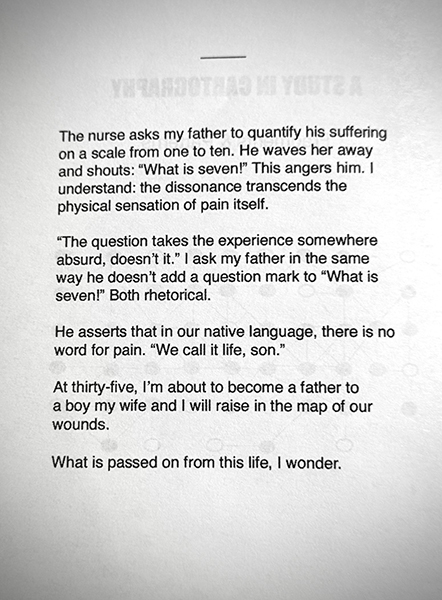
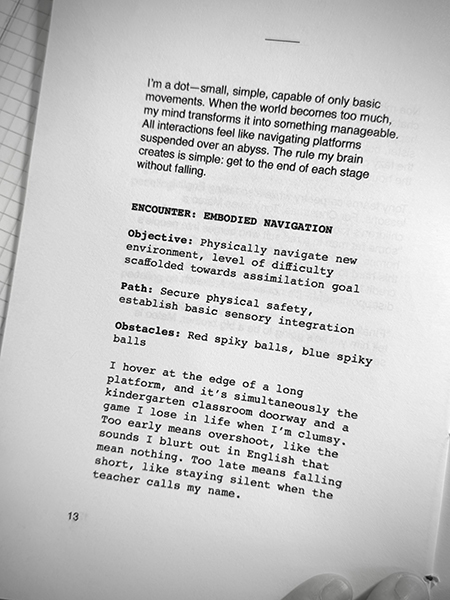
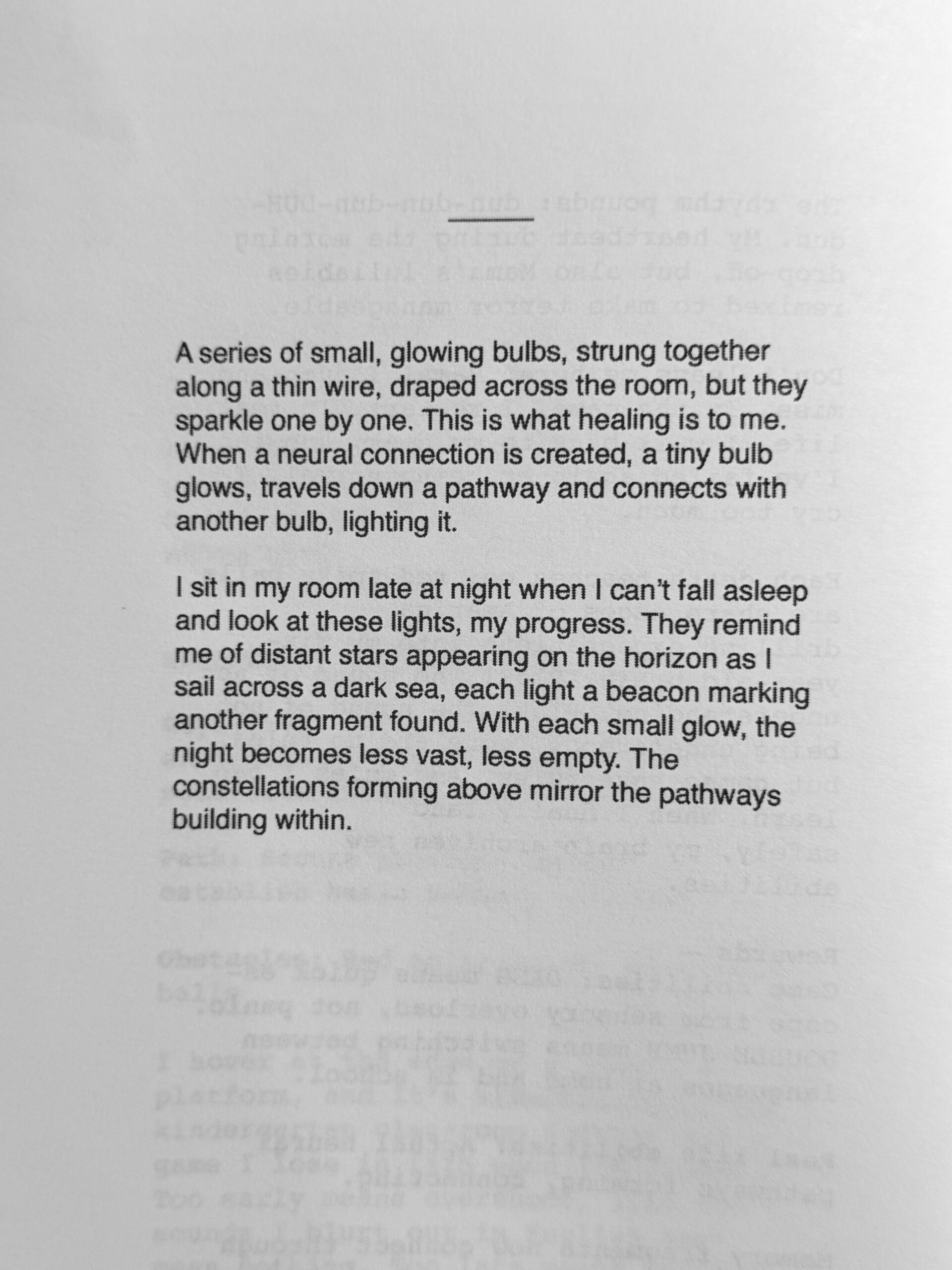
Format: 5.5″ x 8.5″, 74 pages
Materials: copy paper, linen thread binding
Binding: 3 signatures, kettle stitch binding
Edition: 25 hand-made copies, numbered
Distribution: Direct artist engagement with readers and distributors
NYC is Big, My Dreams are Bigger
2025 to date
Completed / Seeking Readers
Project Statement
I created NYC is Big, My Dreams are Bigger because I want to capture what I know to be true—that displacement fractures time, that survival requires navigating backwards through shame and secrets, that the “American Dream” often demands invisible sacrifices we’re not supposed to discuss.
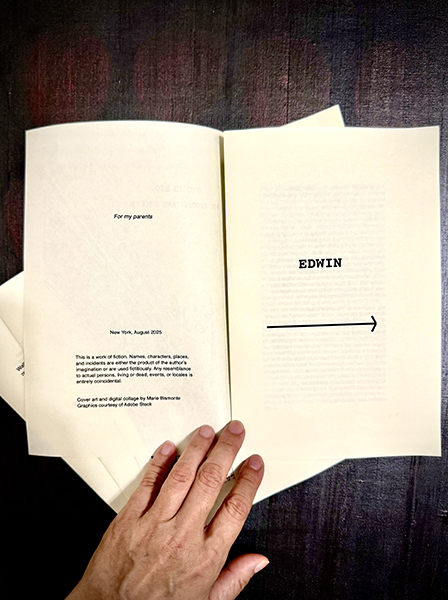
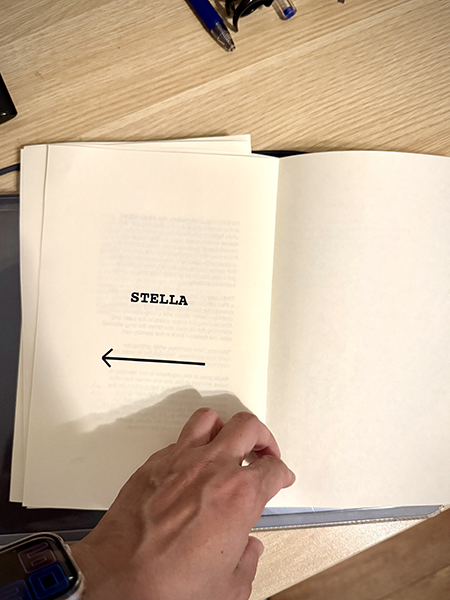
The bidirectional zine format is necessary. Edwin’s story moves forward because that’s how we expect male immigrant narratives to work—arrival, ambition, momentum. Stella’s story excavates backwards because women’s truths about survival are often buried, accessible only by digging through what’s been hidden or erased.
I wanted readers to feel displacement in their hands, to experience the disorientation of not knowing how to navigate something familiar. The physical form forces the same adaptation immigrants face—you can’t consume this story passively. You have to work with unfamiliar systems to get the full picture.
My goal is to compress multiple truths into one small object: how sexual violence becomes the unspoken “fee” for escape; how childhood trauma shapes adult decisions; how Catholic shame operates differently across gender lines; how even intimate partnerships can’t survive certain silences. I’m trying to show that these complexities aren’t side effects of immigrant experience—they are immigrant experience.
The convergent ending—their recognition under the streetlamp—happens not because they’ve resolved anything, but because survival sometimes looks like finding each other again despite carrying impossible weights. That’s the truth I wanted to preserve.
Physical Construction
Structure: Bidirectional narrative (Edwin front-to-back, Stella back-to-front)
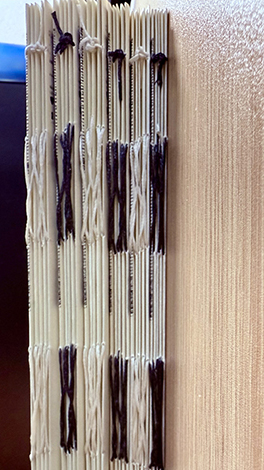
Binding: Canary recycled paper, 5 signatures, French link stitch
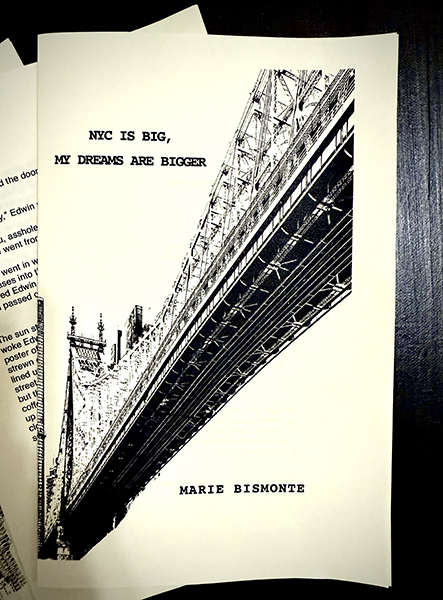
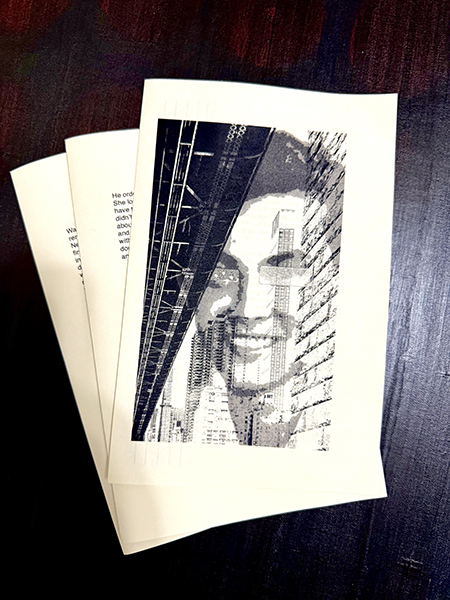
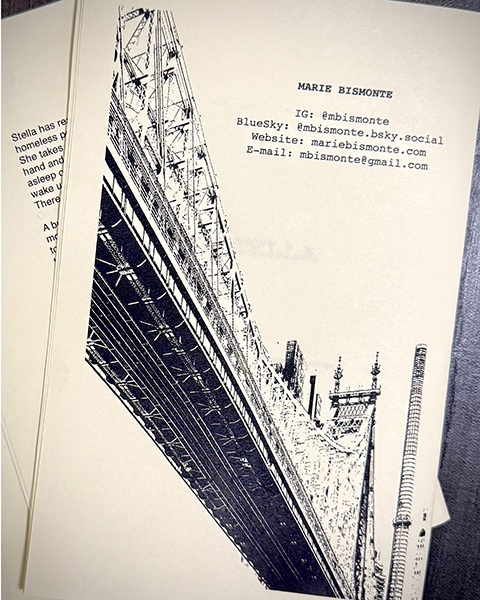
Design: An original photograph of the Queensboro Bridge, re-imaged for the convergence point where both narratives meet. At this center is a collage using vintage photographs of a Filipino man and woman from the 1950s and 60s, layered with another bridge photograph taken from underneath.
Distribution: Ongoing, seeking readers
The Long Game
2025 to date
Completed/Seeking Readers
Project Statement
The concluding work in a trilogy that includes “A Study in Cartography” and “NYC is Big, My Dreams are Bigger,” “The Long Game” synthesizes real experiences from multiple sources into a fictional narrative that exposes the human cost of digital-age colonialism. Set in an offshore call center operating under the cover of international flower delivery, the story follows agents who survive by extracting emotional and financial resources from elderly Americans—a system that transforms victims into perpetrators while diffusing moral responsibility across global economic structures.
The narrative centers on three primary figures: Erika, a local agent funding her sister’s nursing education through two years of psychological compromise; Angel, a nineteen-year-old whose moral clarity prevents him from accessing the collective rationalization mechanisms his colleagues have developed; and Martin (nicknamed “Goldfish”), a supervisor planning his escape while orchestrating systematic exploitation. Their stories intersect in a call center designed as panopticon, where complete surveillance enables both maximum extraction and psychological control.
This work explores how neoliberal economic structures create conditions where survival necessitates participation in harm. The agents are simultaneously victims and perpetrators—exploited by currency differentials and visa vulnerabilities while forced to exploit others through manufactured intimacy. The company profits from both the labor extraction and the psychological damage that prevents organized resistance.
I’m particularly interested in emotional labor as the new frontier of colonial extraction. Unlike traditional colonialism’s focus on raw materials or physical labor, digital colonialism harvests the capacity for human connection itself. Agents perform authentic care while systematically betraying that care—a form of psychological violence that traditional labor analysis fails to address.
Available in digital format for free, suggested donation right here.
Position in Migration Trilogy
As the final work in a trilogy that began with A Study in Cartography and continued with NYC is Big, My Dreams are Bigger, The Long Game focuses on economic displacement—how global economic pressures force people into geographic and moral territories they would not otherwise choose. Where previous installments explored physical and cultural displacement, this work investigates psychological displacement: the internal exile required when survival demands participating in harm.
Physical Construction
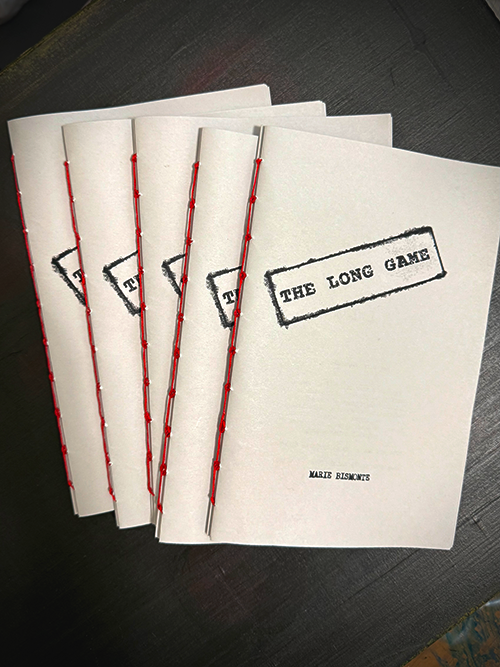
Format: 5.5″ x 8.5″, 54 pages
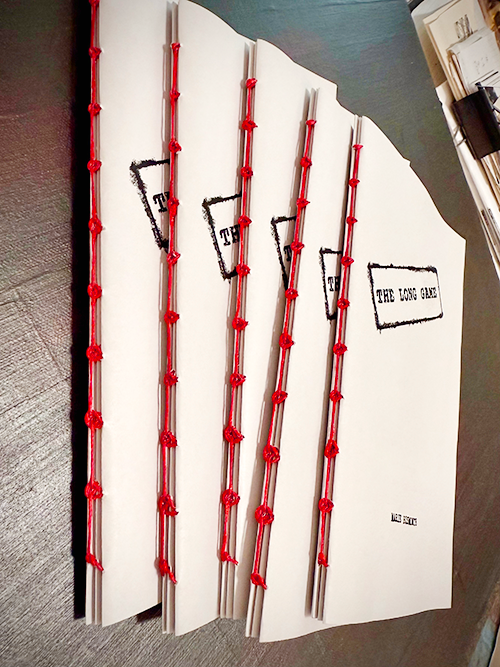
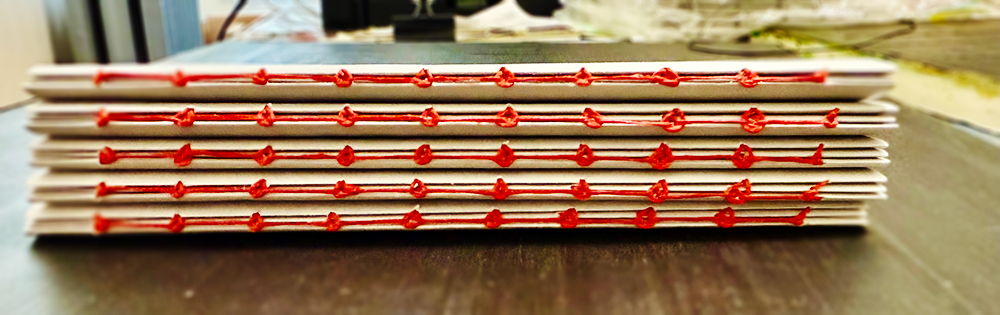
Materials: Pastel gray copy paper, red linen thread binding
Binding: 3 signatures, kettle stitch binding
Design: Intentionally gritty, like a word-down confidential document. The red thread as a marker for the violence that runs through the narrative.
Distribution: Ongoing, seeking readers
Longitudinal Portrait Series: Naiomi S.
2020 – Present
Ongoing
Project Statement
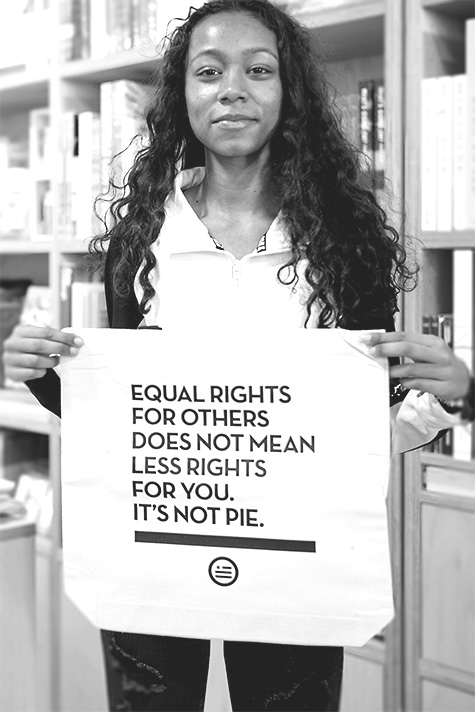
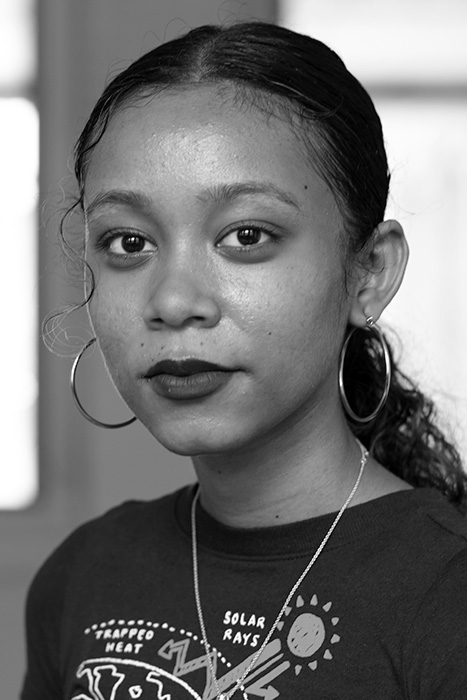
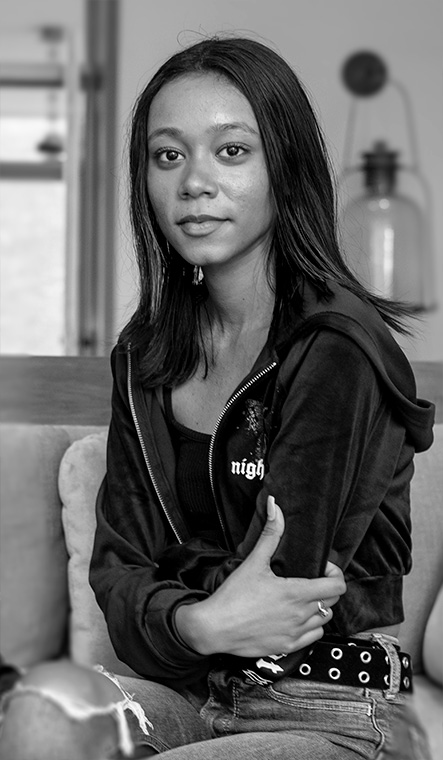
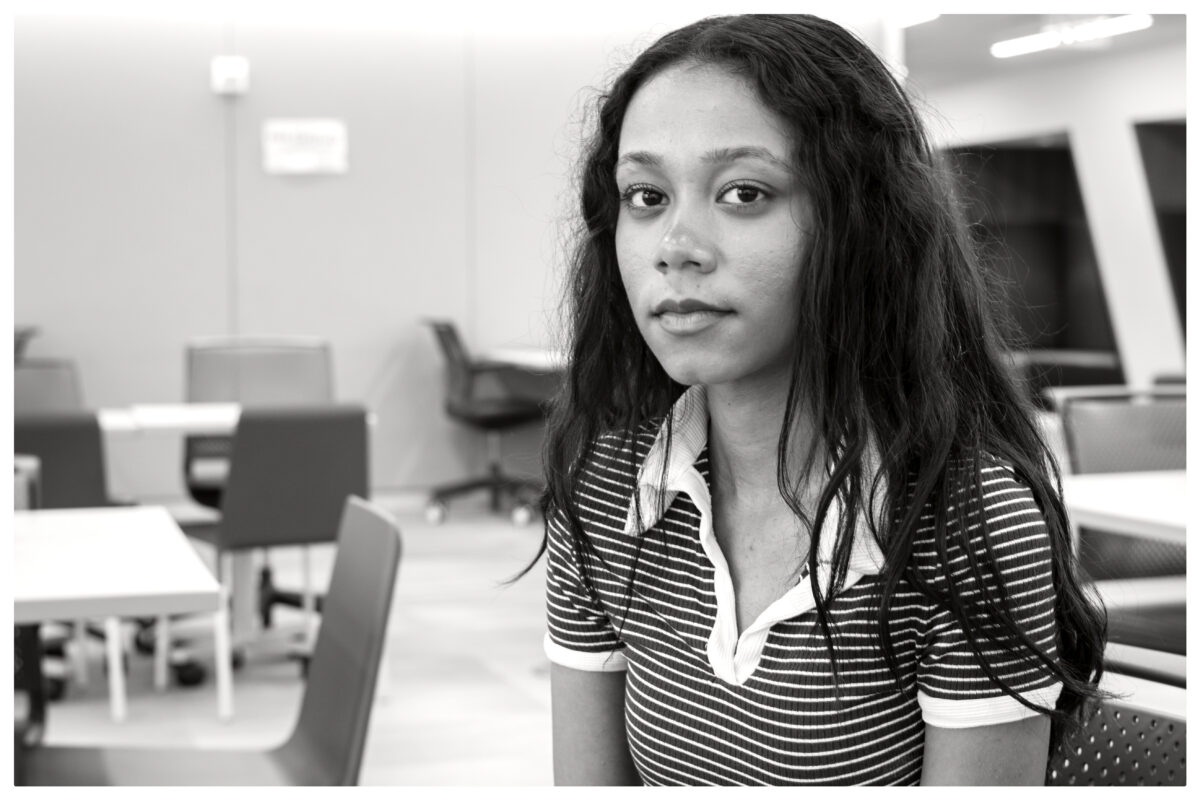
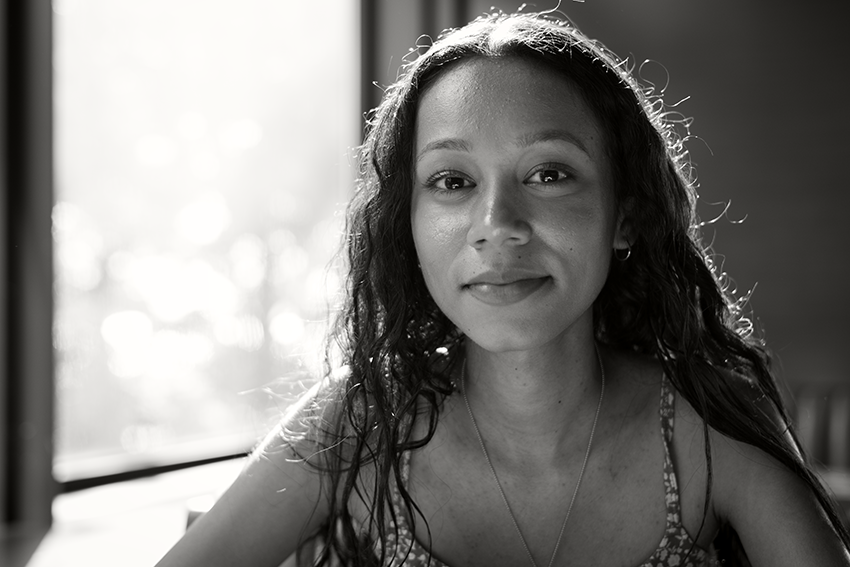
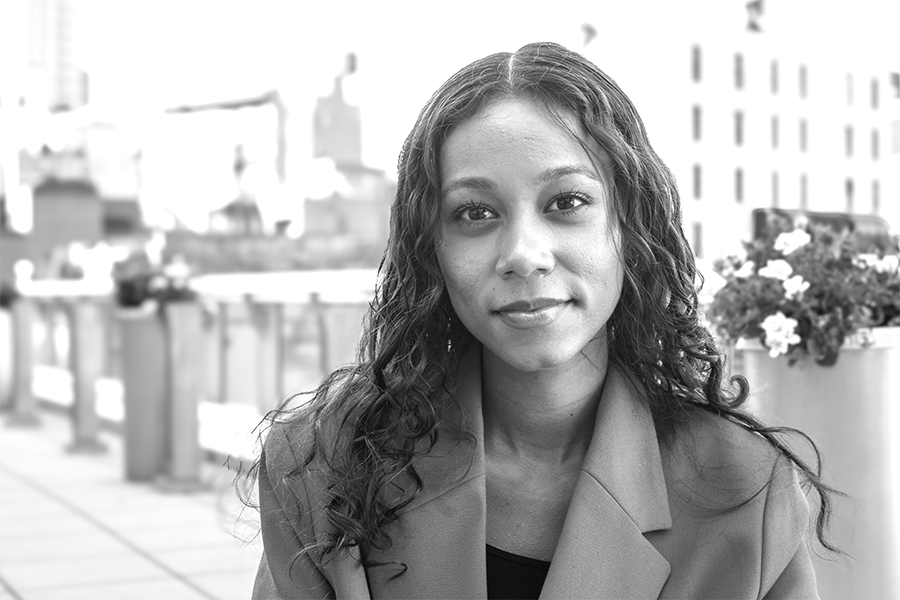
The longitudinal Portrait Project: Naiomi is more than just an attempt to capture identity formation but it also documents how relationships evolve when given space to breathe, how the camera records transformation that happens too slowly for daily observation, how the ritual of annual meeting—a deliberate constraint—creates its own form of connection. I photograph Naiomi once per year—no more—with only occasional text messages between sessions. We save our conversations for these annual meetings, creating a rhythm that mirrors how relationships actually develop: through accumulated time rather than constant contact.
The project began in 2020 when Naiomi was seventeen, a high school senior on a museum trip. What started as a straightforward portrait has become documentation of parallel transformations—hers and mine, individual and relational. Each year’s photograph captures not just her aging and life changes, but how our dynamic shifts: how I see her differently, how she sees me differently, how the camera records what we might not consciously recognize.
By 2024, when she graduated college, we both noticed the change in how we related to each other—and the portrait I captured that year shows it. The photographs become artifacts of a specific kind of intimacy: the accumulation of annual encounters, the weight of witnessed change, the way photographer and subject grow into new versions of themselves together.
During our September 2025 session, Naiomi asked to break tradition and meet more than once yearly. I agreed, uncertain whether abandoning the annual constraint would transform the very thing I was trying to document. But we’re humans, first meeting as mentor/mentee, then as photographer/subject, then as friends. This moment itself becomes part of what I’m documenting: the point where our connection had evolved beyond the project’s original constraints. The annual boundary that had served to create space for organic relationship development was no longer necessary—the constraint had succeeded in fostering a genuine connection that could now sustain itself without artificial limits.